Frequently Asked Questions
Last updated: April 2026
Very little research exists on carbon storage in subtropical tree stocks like coffee — until F.O.C.U.S.™, there were no allometric equations for coffee trees, making accurate carbon measurement impossible. F.O.C.U.S.™ (Farming Output Carbon Utilisation Standard) solved this by sampling and measuring large numbers of coffee trees to build bespoke allometric equations calibrated specifically for coffee agroforestry. Launched in 2022 with European Space Agency support, it measures carbon using a dual approach — satellite remote sensing for above-ground biomass and Loss on Ignition soil sampling for below-ground carbon. Built on GAP77™ (77 regenerative farming practices developed over 13 years), F.O.C.U.S.™ is an open standard enabling carbon insetting within coffee supply chains, helping companies address Scope 3 FLAG emissions — up to 90% of a coffee company's total footprint — directly at the farm level.
For a detailed technical overview, see our carbon measurement methodology for coffee.
What is F.O.C.U.S.™?
F.O.C.U.S.™ stands for the Farming Output Carbon Utilisation Standard. It is a carbon credit standard built specifically for coffee farms. Launched in 2022 with support from the European Space Agency (ESA), it combines satellite data and soil science to measure and verify carbon stored across smallholder coffee farms in East Africa.
What is GAP77™?
GAP77™ is a set of 77 practical regenerative farming methods developed over 13 years specifically for coffee farming. These practices — including afforestation, biochar production, the Fishbone irrigation system, composting, and contour planting — form the agronomic foundation of the F.O.C.U.S.™ programme. See key GAP77™ practices and how they drive carbon sequestration.
How is carbon measured on coffee farms?
F.O.C.U.S.™ uses a dual measurement approach. Above-ground carbon is measured using satellite remote sensing combined with bespoke allometric equations built specifically for coffee. Below-ground soil organic carbon is measured using spectral analysis for baselines and Loss on Ignition (LOI) testing for ongoing monitoring, with stratified sampling at 30cm depth across each farm.
What is biochar and how is it used in coffee farming?
Biochar is produced by converting coffee cherry pulp — a waste product from coffee processing — into a stable carbon-rich material. When added to soil, biochar locks carbon into a form that remains stable for over 100 years while also improving soil fertility. This turns a waste product into a tool for both carbon sequestration and improved farm productivity.
What is the Fishbone irrigation system?
The Fishbone System is a gravity-fed irrigation method that uses lateral erosion channels to distribute water across a farm. It requires zero pumps and no expensive infrastructure — just effective water distribution that prevents runoff and preserves nutrient-rich topsoil.
How does satellite monitoring work for carbon measurement?
Satellite measurements track biomass changes across mapped farms over time. Bespoke allometric equations, developed specifically for coffee, convert satellite biomass data into carbon estimates based on tree size, diameter, and growth patterns. This is combined with on-the-ground soil sampling for a complete above and below-ground carbon picture.
How are farm boundaries mapped?
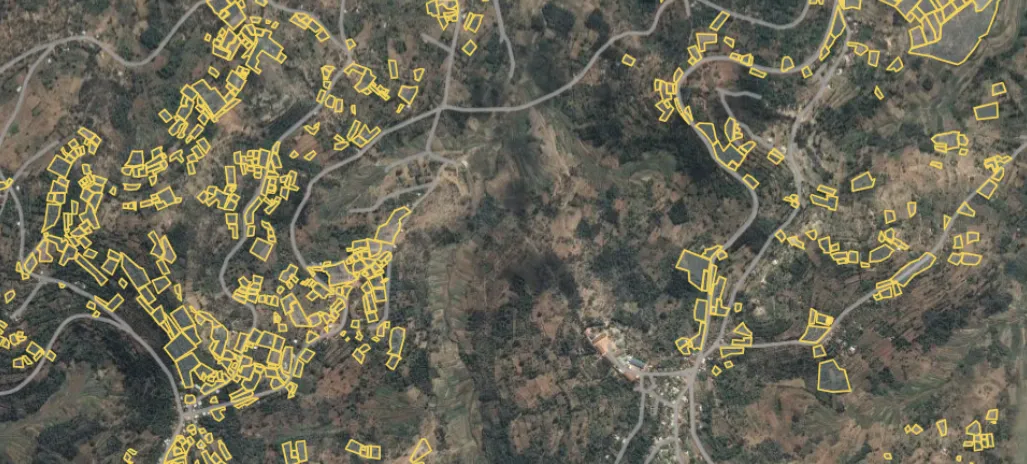
F.O.C.U.S.™ uses a mobile mapping app that works offline to accurately map the plots of participating farmers using geo-referenced data collection. This defines project boundaries and supports ongoing carbon monitoring across 250,000+ farms.
How are carbon credits verified?
Carbon is measured using a dual approach — bespoke allometric equations applied to satellite biomass data, alongside soil sampling. Results are fully traceable from individual farm to registry, providing a clear and verifiable view of carbon stored across coffee farms.
Who founded F.O.C.U.S.™?
F.O.C.U.S.™ was co-founded by David Mills (CEO), Mario Serracin, Ph.D. (Head of Regenerative Agriculture), and Graham Mills (CTO). The standard draws on 13 years of direct work with coffee farming communities in East Africa.
Which organisations support F.O.C.U.S.™?
F.O.C.U.S.™ is supported by the European Space Agency (ESA), UK Space Agency, Innovate UK, and the Satellite Applications Catapult. The programme was launched through the ESA Business Applications programme.
How is F.O.C.U.S.™ different from other carbon credit standards?
F.O.C.U.S.™ is the only open, coffee-specific carbon credit standard — any coffee company can use it, unlike brand-specific insetting programmes. It focuses on carbon addition rather than merely preventing emissions, using bespoke allometric equations developed from direct coffee tree sampling rather than adapted from generic forestry models. It is designed as a verified value chain intervention, enabling companies to address Scope 3 emissions within their own supply chain.
What are the benefits for farmers beyond carbon credits?
GAP77™ practices deliver measurable co-benefits: coffee yields can increase from as low as 0.3 kg to up to 4 kg of cherry per tree. Banana intercropping provides shade and a secondary income stream. Soil health improves through increased microbial activity, and farms become more resilient to pests and fungal disease. Climate resilience improves as farms are better equipped to handle the increasing heat stress affecting all 25 major coffee-producing countries. Farmers also receive AI-driven SMS alerts based on hyperlocal weather forecasts and satellite stress indicators to guide key farming activities.
How does F.O.C.U.S.™ align with corporate sustainability frameworks?
For coffee companies, Scope 3 emissions (Category 1: Purchased Goods and Services) represent up to 90% of their total carbon footprint, with 68-91% of coffee's emissions occurring before beans leave the farm. F.O.C.U.S.™ works at the farm level, enabling carbon insetting — a verified value chain intervention within your own supply chain, not disconnected offsetting. Coffee is one of seven mandatory commodities under SBTi FLAG (Forest, Land and Agriculture) targets. F.O.C.U.S.™ traceability supports reporting against CSRD/ESRS, SBTi FLAG, EU Taxonomy, and the EU Deforestation Regulation (EUDR) through farm-level geolocation data.
What does one F.O.C.U.S.™ carbon credit represent?
Each F.O.C.U.S.™ carbon credit represents one metric tonne of CO₂ equivalent removed from the atmosphere through verified carbon sequestration on coffee farms. Credits are backed by dual above-ground and below-ground measurement, and are retired upon purchase to prevent double-counting.
How does F.O.C.U.S.™ prevent leakage and ensure carbon permanence?
F.O.C.U.S.™ monitors surrounding areas — including forests, subsistence farms, and wasteland around each Coffee Washing Station (CWS) zone — to minimise the risk of leakage. Historical satellite data verifies no deforestation or land conversion has occurred in the prior four years. Soil samples are tested at 30cm depth with the bottom 10cm analysed separately to assess long-term carbon permanence. See our leakage prevention methodology for full details.
Why are coffee farms suited to carbon sequestration?
Years of soil sampling across coffee farms have revealed a common picture — depleted soils with high acidity, imbalanced nutrients, and a lack of the microbiology that healthy ecosystems depend on. Poor land management and, in some regions, excessive fertiliser use have left these soils underperforming. Most carbon standards aren't built for this — they focus on preventing emissions from existing carbon stocks, not on adding new carbon. Coffee farms, with degraded soils and room for regenerative intervention, represent a significant and largely unaddressed opportunity for carbon sequestration. F.O.C.U.S.™ was built to close that gap, combining proven regenerative practices with precise satellite and soil measurement to turn coffee farms into active carbon sinks while improving yields, biodiversity, and farmer livelihoods.
How can coffee companies work with F.O.C.U.S.™?
F.O.C.U.S.™ is an open standard — any coffee company can partner with it, unlike proprietary brand-specific programmes. It addresses Scope 3 Category 1 emissions directly at the farm level, where 68-91% of coffee's carbon footprint originates. Measurement, verification, and farmer training infrastructure is already in place. Companies can integrate carbon insetting into their sourcing as a verified value chain intervention, supporting their SBTi FLAG targets, CSRD/ESRS reporting, and building climate resilience across their supply chain.
Why is a coffee-specific carbon standard needed?
There has been limited research into carbon storage potential in subtropical tree stocks like coffee. Generic agricultural or forestry carbon standards rely on broad estimates that don't capture the specific carbon dynamics of coffee agroforestry systems. F.O.C.U.S.™ addresses this with custom allometric equations and satellite monitoring built specifically for coffee, providing precise measurements where broader standards fall short. This allows coffee farmers to be recognised as proactive contributors to carbon sequestration rather than passive participants.
What is additionality and how does F.O.C.U.S.™ demonstrate it?
Additionality means the carbon sequestration would not have happened without the project's intervention. F.O.C.U.S.™ demonstrates additionality through initial consultation and surveys that assess current farming practices and identify challenges. Baseline soil samples establish the starting carbon levels before GAP77™ practices are implemented. Historical satellite data confirms the land was not recently deforested. This evidence shows that the carbon being sequestered is genuinely new — a direct result of the regenerative practices introduced through the programme.
How does F.O.C.U.S.™ get started with a new farming community?
F.O.C.U.S.™ follows a phased implementation process: First, an initial consultation with farmers at a Coffee Washing Station introduces GAP77™ practices and surveys current conditions. Then, mobile mapping software maps each participating farm's boundaries. A select group of early adopters form a core group to spearhead carbon farming. Contracts are signed establishing farmers as the rightful owners of their carbon credits. Baseline soil samples are collected at 30cm depth to establish starting carbon levels. Finally, satellite data verifies historical land use to confirm no recent deforestation. As early adopters demonstrate results, more farmers voluntarily join, and the programme scales across the region.
What is carbon insetting and how is it different from offsetting?
Carbon insetting means reducing or sequestering carbon within your own supply chain, rather than purchasing credits from unrelated projects elsewhere. For coffee companies, this means funding regenerative practices on the farms that grow their coffee — directly linking climate action to their product. Unlike traditional offsetting, insetting is more traceable, more credible, and increasingly favoured by regulators. The EU Green Claims Directive is moving to restrict carbon neutrality claims based solely on offsetting, making insetting the more sustainable long-term approach.
Partner with us
The Pathway Forward
F.O.C.U.S.™ on your carbon and sustainability goals.
Get in touch →